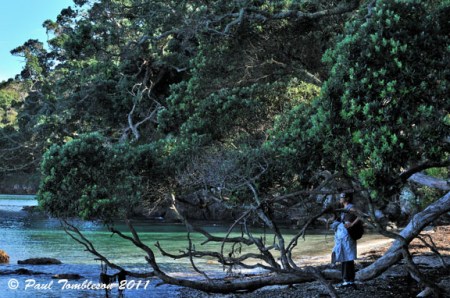
Tiritiri Matangi the last Refuge
At 6am we drive off into the pre dawn darkness leaving the sounds and smell of surf behind us to visit a place we have been hearing about since arriving in the Bay of Islands. Tiritiri Matangi a small island in the Hauraki Gulf just minutes by ferry from New Zealand’s largest city, Auckland. Yet, this little island holds the key to the future of the native birds and reptiles than in some cases were thought to be extinct or critically endangered.

Landing at Tiritiri Matangi
Driving toward the emerging light in the eastern sky, there is not another car on the road for miles. What we do see are the incandescent glow of milking sheds and smell the distinct odor of the dairy cows, which elicit child hood memories of me gathering in the early morning a container of fresh warm milk for the breakfast table while visiting my uncle’s dairy farm.
The suns rays finally streak over the eastern hills as we approach the east coast again. A right turn and we are racing back down the main highway to the Whangaparaoa Peninsula, just north of Auckland to catch the ferry the 4 kilometers to another world.
Tiritiri Matangi, meaning “tossed by the wind”, is an Open Scientific Reserve managed by the Department of Conservation (DOC) in partnership with the Supporters of Tiritiri Matangi Inc. The “open sanctuary” status allows 150 ferry visitors daily from Wednesday to Sunday onto the island. Here they can witness first hand some of New Zealand’s rarest inhabitants in a natural and protected environment. Visitors can have the opportunity to stay on the island overnight by booking through the Department of Conservation. This experience is truly unique, observing New Zealand’s nocturnal wildlife emerging as the sun goes down, wildlife such as the Little Blue Penguin (the world’s smallest penguin), the Little Spotted Kiwi, and the Tuatara.
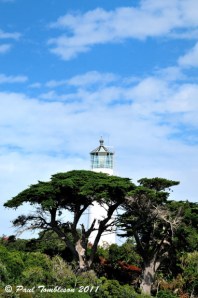
Tiritiri Light House
Tiritiri Matangi is one of the world’s most successful volunteer conservation projects. It has been re-vegetated with around 300,000 native trees and consequently 12 of New Zealand’s endangered birds and 3 reptile species have been re-introduced.
The weather is bright and almost warm so we sit outside on the aft deck hoping to catch a glimpse of the dolphins that often follow the boat, but alas not this crossing. Strict controls are maintained that visitors don’t introduce unwanted animals and plants both before we leave and once we have landed. Then it is off on a walk around the island. We go in the opposite direction from most and quietly explore the shoreline and isolated parts.
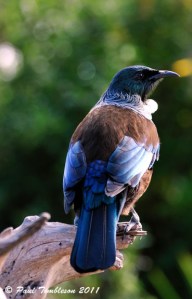
Tui
This is the first time I have spent a full day “bird watching” something I don’t think would normally hold my interest. But, I found myself with keen interest having been born in Aotearoa and hearing about the extinct or rare birds. So I was very interested in seeing them.
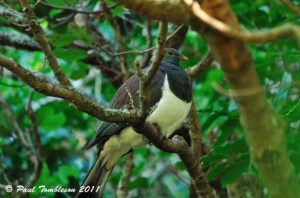
Native Wood Pidgeon
The Saddleback, Hihi or Stitch bird, Red Crowned Parakeet and Takahe held a special charm for me, as it was the first time I had seem them. It’s only the second time I had seen the Wood Pigeon. The Tui’s and Bellbirds dominate the sound landscape. With the Tui being one of those birds that you just love for its song, its antics and its intricate beauty.
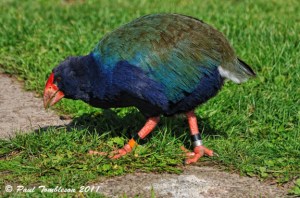
The Thought to be Extinct "Takahe"
A truly unique place and well worth the visit if for nothing else than to appreciate all the hard labor, commitment and courage to set up this open sanctuary. A true national treasure and example for the rest of the world to follow.
My sore feet and tired limbs never did a more rewarding days work…








 Paul Tombleson
 Paul Tombleson